
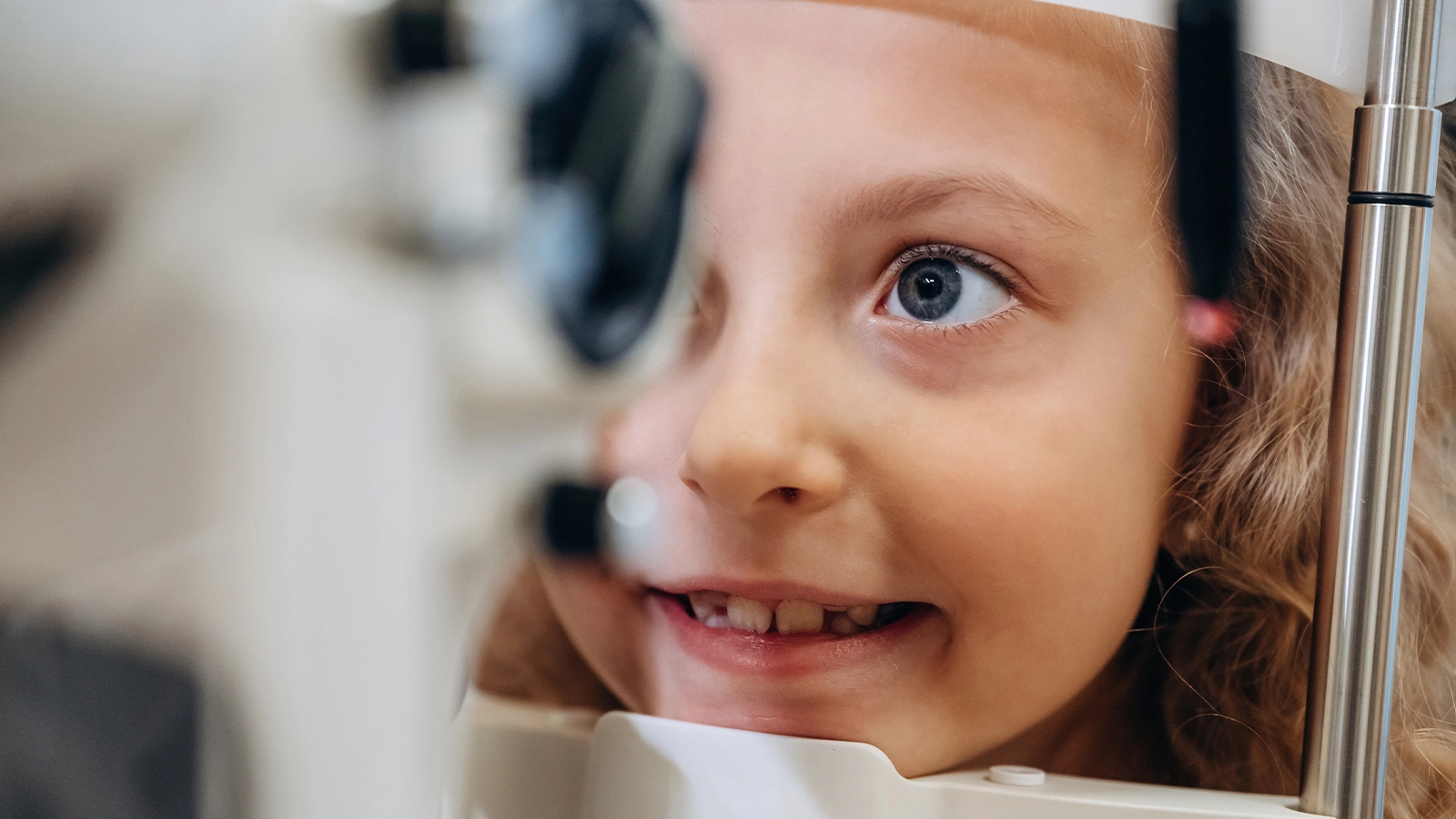
Well-functioning vision is essential for learning—about 80% of classroom information is visual. Yet many children don’t complain about blurry sight because they assume everyone sees the same way as they do.
Follow this recommended schedule for pediatric eye exams (per American Academy of Ophthalmology guidelines):
- First comprehensive exam: 6–12 months
- Ages 3–5: Check for alignment issues or amblyopia (“lazy eye”)
- Before kindergarten (~5–6 years)
- School-age: Every 1–2 years, or sooner if concerns arise
Watch for these red flags that may signal vision problems:
Squinting, frequent eye rubbing, headaches, short attention span during reading, holding books too close, losing place while reading, covering one eye, unusual head tilting, or avoiding close-up tasks.
To the extent possible, limit recreational screen time (1–2 hours/day for young kids) and follow the 20-20-20 rule: Every 20 minutes, look 20 feet away for 20 seconds. Encourage time outside too. 1,5+ hours of natural sunlight has been shown to reduce the risk of nearsightedness (myopia), and also slows its progression.
Early detection makes a huge difference—conditions like nearsightedness or amblyopia are often treatable when caught young. At Blink Vision, we make eye exams fun and stress-free for kids. Bring your little one in for a check-up—set them up for school success and confidence!